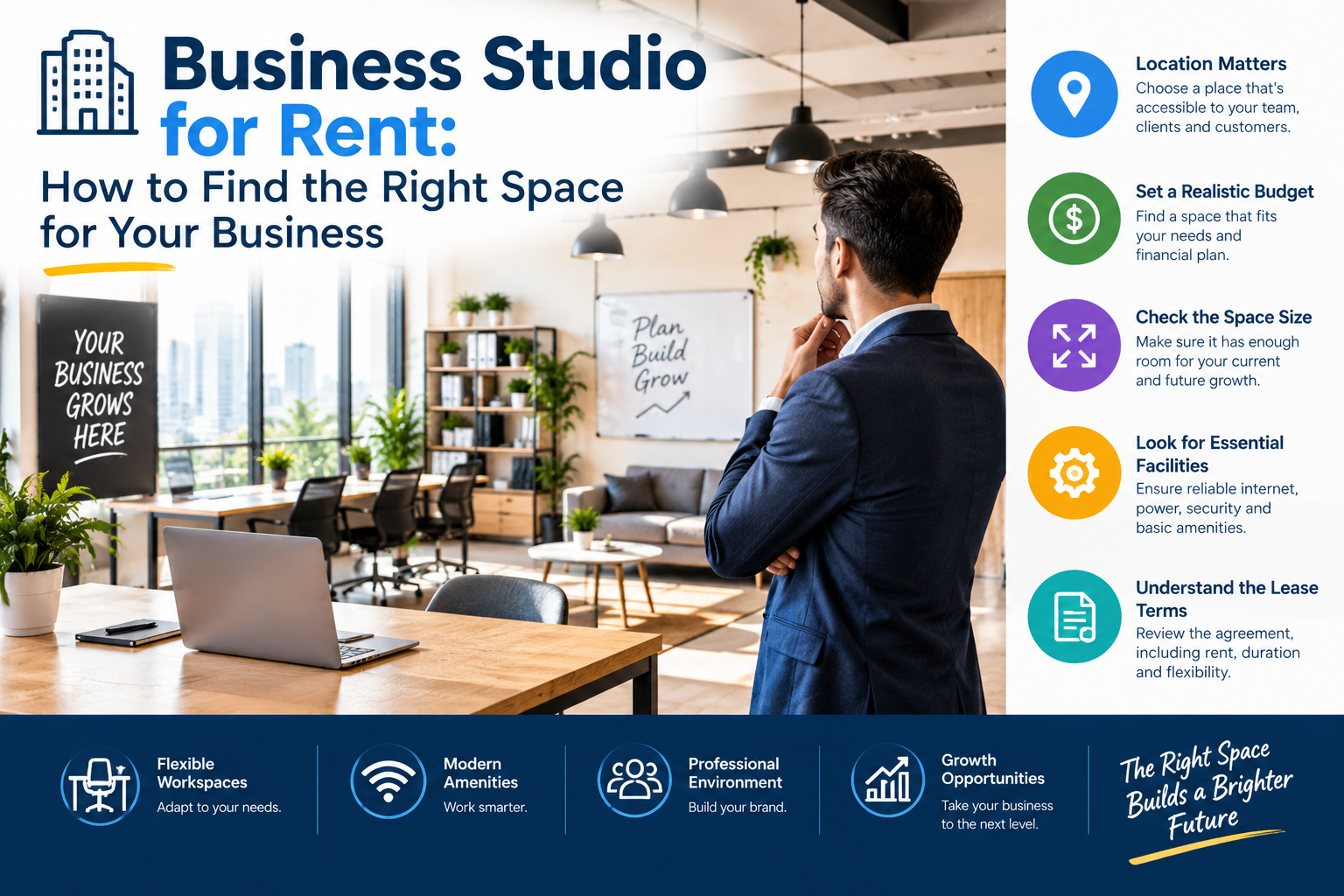
Finding the right workspace is an important step when starting or growing a business. Whether you run a creative company, offer photography services, or manage a small team, a suitable space can make daily operations easier. However, renting a commercial property requires careful planning.
A business studio for rent can provide a practical workspace without requiring you to purchase commercial property. It may also offer more flexibility than a traditional office. Some studios are designed for creative projects, while others are suitable for meetings, content creation, and everyday business activities.
Before choosing a space, consider your business needs, compare available properties, and review the rental terms. This guide explains the different types of business studios, what to look for, and how to choose a space that fits your budget and goals.
What Is a Business Studio?
A business studio is a dedicated workspace used for professional or commercial activities. It can be a small private unit, an open-plan room, or a larger space designed for a particular type of work.
Unlike a traditional office, a studio may offer a flexible layout. Depending on the rental agreement, tenants can arrange the space to suit their daily activities.
Business studios are commonly used for:
- Photography and video production
- Graphic design and creative services
- Product development and small-scale manufacturing
- Marketing and content creation
- Consulting and professional services
- Workshops and training sessions
- Small business administration
The right studio depends on the nature of your work. A photographer may need suitable lighting and enough room for equipment. A consultant may need a quiet space with a desk and a meeting area.
Why Rent a Business Studio?
Renting a studio gives businesses access to a dedicated workspace without the cost of purchasing commercial property. It can also create a clear separation between professional and personal activities.
Here are some key benefits to consider.
Lower Initial Financial Commitment
Buying commercial property usually requires a significant financial investment. Renting allows you to use a professional workspace without making that commitment.
Tenants may also avoid some responsibilities associated with property ownership. However, maintenance and repair obligations depend on the rental agreement.
Before signing, check the security deposit, monthly rent, service charges, and other expenses. These costs can affect your overall budget.
A Professional Working Environment
A dedicated studio can create a professional environment for employees, clients, and business partners.
For example, a marketing consultant can use a rented studio for client meetings and project discussions. A content creator can use the space to record videos without the interruptions that may occur at home.
A separate workspace can also help you maintain a consistent work routine.
More Control Over Your Workspace
A business studio may give you more control over how you organize your working environment.
You may be able to add desks, storage units, lighting equipment, and other essentials. However, major changes may require the landlord’s approval.
A flexible layout is particularly useful for businesses that perform different tasks throughout the day.
Room for Business Growth
A studio can provide additional space when a business outgrows its home office.
For example, an independent designer may initially work alone. As the business grows, the designer might need room for an assistant, client meetings, and project equipment.
Renting a suitable studio can support this growth without requiring an immediate move into a large commercial office.
Types of Business Studios Available for Rent
Not every studio is suitable for every business. Understanding the available options can help you find a space that meets your needs.
Creative Business Studios
Creative studios are commonly used by designers, artists, photographers, and content creators.
Depending on the property, these spaces may have open layouts, large windows, adjustable lighting, and storage areas.
Before renting one, check whether it has enough electrical outlets, reliable internet access, and sufficient room for your equipment.
Photography and Video Studios
Photography and video studios are designed for visual production. They may include lighting systems, backdrops, sound equipment, and dedicated shooting areas.
Some facilities provide equipment as part of the rental package. Others offer an empty space that tenants must prepare themselves.
If you plan to record videos or conduct interviews, pay attention to sound insulation and outside noise. Good lighting and enough room for cameras are also important.
Office-Style Business Studios
An office-style studio is suitable for businesses that need a quiet and organized working environment.
It may include desks, chairs, meeting rooms, internet access, and shared facilities.
This type of workspace can suit consultants, small agencies, freelancers, and professional service providers.
Workshop and Production Studios
Some studios are designed for hands-on work, product development, or small-scale production.
These spaces may require reliable electrical systems, suitable ventilation, durable flooring, and additional storage.
Check local regulations and building restrictions before using a studio for manufacturing or other specialized activities. Not every commercial unit is approved for these purposes.
How to Find the Right Business Studio for Rent
Finding a suitable studio involves more than comparing photographs and rental prices. You should also evaluate the location, size, facilities, and lease conditions.
1. Define Your Business Requirements
Start by identifying what you need from the space.
Consider the following questions:
- How many people will use the studio?
- What activities will take place there?
- Do you need space for clients or visitors?
- Will you store equipment or products?
- Do you need a private room or an open layout?
- How much can you afford to spend?
Write down your essential requirements before contacting landlords or property agents. This will help you avoid paying for facilities you do not need.
2. Choose a Suitable Location
Location can affect customer access, employee convenience, and daily operating costs.
A studio near your customers may be useful if you regularly hold meetings or provide services in person. If most of your work happens online, reliable internet and affordable rent may be more important.
Consider these factors:
- Distance from public transport
- Availability of parking
- Road access and traffic conditions
- Nearby shops and business services
- Safety and building security
- Accessibility for clients and employees
If possible, visit the area at different times. This can help you assess traffic, noise, and general working conditions.
3. Compare Studio Sizes
Choose a studio that provides enough room for your current activities without creating unnecessary expenses.
Measure the available floor area and consider how furniture, equipment, and storage will fit.
Leave enough space for people to move around comfortably. A room may look large when empty but feel crowded after desks and equipment are installed.
If you expect your business to grow, consider whether the layout can accommodate additional furniture or staff.
4. Check Facilities and Services
The available facilities can affect how comfortably and efficiently you work.
Depending on your business, useful features may include:
- High-speed internet
- Reliable electricity
- Air conditioning or ventilation
- Restrooms
- A kitchen or refreshment area
- Secure entry
- Parking facilities
- Cleaning and maintenance services
- Meeting rooms
Do not assume that every advertised facility is included in the rent. Ask the landlord which services are available and whether they involve additional charges.
5. Set a Realistic Rental Budget
Monthly rent is only one part of the total cost.
You may also need to pay a security deposit, utility bills, maintenance fees, internet charges, and parking costs.
Some landlords also require advance rent or additional payments before handing over the keys.
Prepare a complete budget before making a decision. This will help you determine whether the studio is affordable throughout the rental period.
Important Things to Check Before Signing a Lease
A rental agreement explains the responsibilities of both the tenant and the property owner. Read it carefully before signing.
Rental Period and Renewal Terms
Check the length of the agreement and whether you can renew it.
Some studios are available for short-term rental, while others require a longer commitment. Choose a rental period that matches your business plans.
Also, check the notice period required if you decide to leave.
Permitted Business Activities
Confirm that the property allows your intended business activities.
For example, a building may permit ordinary office work but restrict noisy production, public events, or certain types of equipment.
If you need to meet customers, display products, or record videos, discuss these activities with the landlord before signing.
Maintenance Responsibilities
Find out who is responsible for repairs and routine maintenance.
The agreement should explain how issues involving electricity, plumbing, heating, cooling, and other building systems will be handled.
It is also useful to understand how quickly the landlord responds to maintenance requests.
Security and Access
Check the building’s security arrangements and access hours.
Some studios allow access throughout the day, while others have fixed opening and closing times.
If your business requires evening or weekend work, confirm that you can enter the property when needed.
Rules for Changes and Decoration
You may want to paint walls, install shelves, add partitions, or set up specialist equipment.
However, these changes may require the landlord’s permission.
Ask which modifications are allowed and whether you must restore the space to its original condition before leaving.
Common Costs of Renting a Business Studio
The cost of renting a business studio depends on several factors. Location, size, condition, facilities, and rental duration can all influence the price.
Instead of focusing only on the advertised rent, calculate the full cost of using the space.
| Expense | What to Consider |
|---|---|
| Monthly rent | The regular payment for using the studio |
| Security deposit | The amount held by the landlord |
| Utilities | Electricity, water, gas, and other services |
| Internet | Connection fees and monthly plans |
| Maintenance | Building services or repair charges |
| Furniture | Desks, chairs, shelves, and storage |
| Insurance | Coverage required for your business or equipment |
| Parking | Any separate parking charges |
Ask for a written breakdown of all costs. This makes it easier to compare different properties.
Also, check whether the rent can increase during the agreement and how much notice the landlord must provide.
How to Make the Most of a Rented Business Studio
Once you have selected a studio, organize it around your daily business activities.
Create a Practical Layout
Arrange the furniture according to how you use the space.
Keep frequently used equipment within easy reach. Place storage units where they do not block walkways or emergency exits.
If clients visit regularly, create a clean and welcoming meeting area.
Invest in Essential Equipment
Start with the items your business needs most.
These may include computers, desks, chairs, lighting, storage, and communication equipment.
Avoid purchasing expensive items before confirming that the studio has the necessary facilities and permissions.
Maintain a Professional Appearance
A clean and organized workspace can create a positive impression.
Keep shared areas tidy and store equipment safely. Use clear labels for important supplies and documents.
Good organization also reduces the time spent searching for everyday items.
Review Your Space Requirements Regularly
Business needs can change over time.
You may need additional storage, more desks, or a different layout as your operations develop.
Review your space requirements every few months. If the studio no longer meets your needs, discuss possible changes with the landlord or explore other rental options.
Common Mistakes to Avoid When Renting a Business Studio
A suitable studio can support your business, but a poor rental decision can create unnecessary costs.
Avoid these common mistakes:
- Choosing based only on price: A cheap studio may lack essential facilities or have an unsuitable location.
- Ignoring additional costs: Deposits, utilities, and service charges can increase your total expenses.
- Skipping property inspections: Photographs may not reveal maintenance problems, noise, or limited access.
- Ignoring lease conditions: Unclear terms can create problems when you want to renew or end the agreement.
- Renting too much space: An oversized studio can increase expenses without providing real benefits.
- Overlooking business restrictions: The property may not permit your intended activities.
- Failing to check internet and electricity: Poor connectivity or unreliable power can interrupt daily operations.
Taking time to inspect the property and review the agreement can help you avoid these problems.
Frequently Asked Questions
1. What is a business studio used for?
A business studio can be used for photography, video production, design, consulting, content creation, workshops, and other professional activities. Its suitability depends on the layout, facilities, and permitted use.
2. How much does it cost to rent a business studio?
The rental price varies according to location, size, facilities, and lease duration. Additional expenses may include utilities, maintenance, internet, parking, and security deposits. Contact local property owners or agents for current prices.
3. Can a small business rent a studio?
Yes. Many small businesses and independent professionals rent studios to establish a dedicated workspace. Before signing, check the rental terms, total costs, and any restrictions on business activities.
4. What should I check before renting a studio?
Inspect the property’s condition, electrical supply, internet availability, security, access hours, facilities, and location. Review the lease carefully and confirm that your intended business activities are permitted.
5. Is a business studio better than a traditional office?
It depends on your requirements. A studio may offer a more flexible layout for creative or specialized work. A traditional office may be more suitable for businesses that need multiple private rooms, formal meeting areas, or dedicated office facilities.
Conclusion
Choosing the right business studio for rent requires careful planning and a clear understanding of your business needs. The best space is not necessarily the largest or most expensive. It is the one that offers suitable facilities, a convenient location, and affordable rental terms.
Before making a decision, compare different properties, inspect each space, and review the rental agreement. Consider both your current requirements and possible future changes.
A well-chosen business studio can provide a professional environment, support daily operations, and give your business room to grow. Take the time to evaluate your options and choose a workspace that fits your goals and budget.