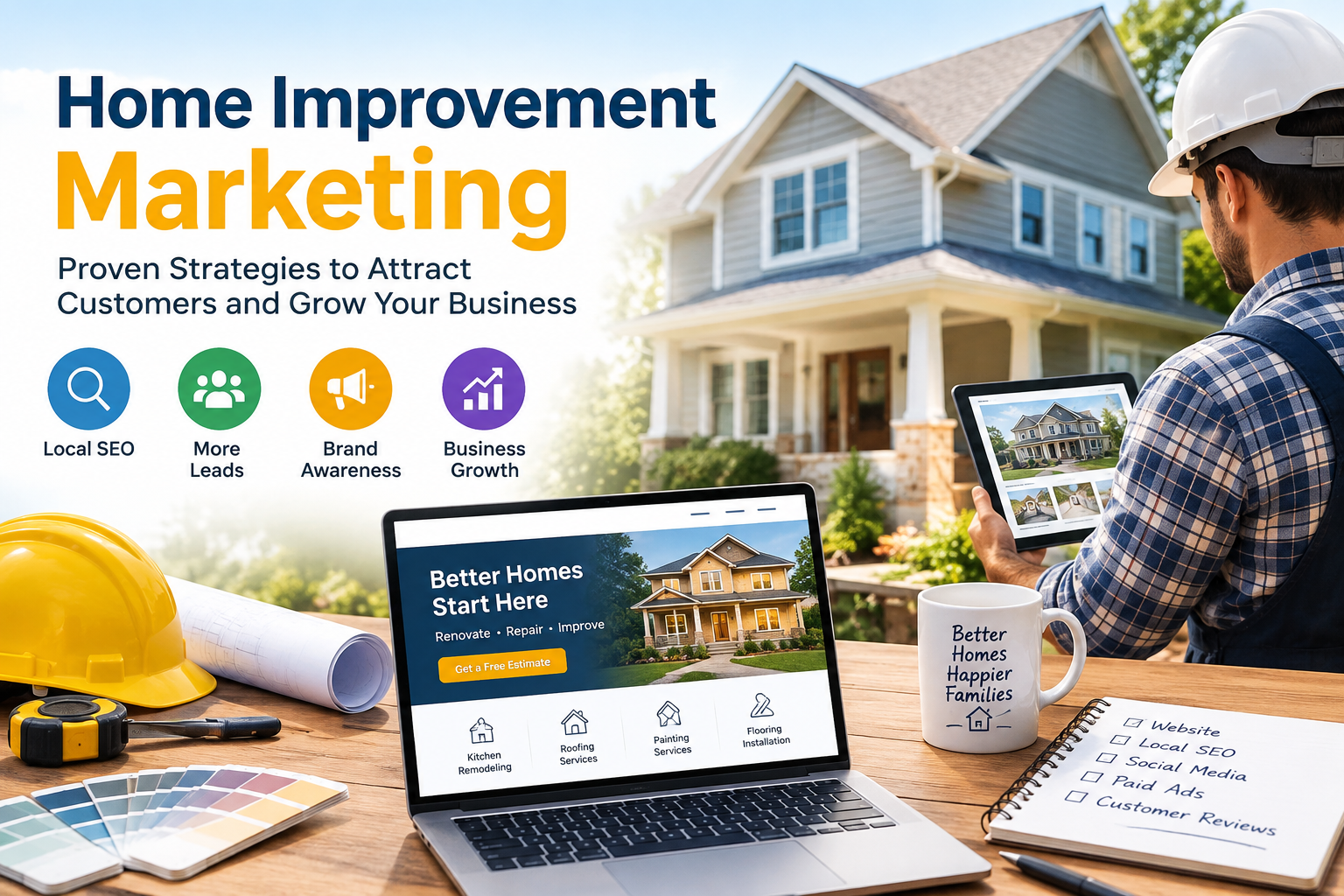
Home improvement marketing helps contractors, remodelers, roofers, painters, and other service providers connect with homeowners who need professional services. Whether you run a small renovation company or an established home improvement business, effective marketing can help you attract qualified leads, build trust, and increase sales.
Today, many homeowners search online before hiring a contractor. They compare service providers, read customer reviews, view project photos, and request estimates. Businesses with a strong online presence make it easier for potential customers to discover their services and evaluate their expertise.
A successful home improvement marketing strategy combines digital marketing, local SEO, customer referrals, and clear communication. The right approach depends on your services, target audience, budget, and business goals.
What Is Home Improvement Marketing?
Home improvement marketing involves promoting services related to repairing, renovating, upgrading, and maintaining residential properties. Its primary purpose is to connect service providers with homeowners who need professional help.
Home improvement businesses may offer services such as:
- Kitchen and bathroom remodeling
- Roof installation and repairs
- Interior and exterior painting
- Flooring installation
- Plumbing and electrical work
- Landscaping and outdoor improvements
- Window and door replacement
- Home insulation and energy efficiency upgrades
Each service may require a different marketing approach. For example, a roofing contractor might use local SEO to attract homeowners searching for roof repairs. A kitchen remodeling company might showcase before-and-after photos on social media to demonstrate the quality of its work.
Understanding your services and target audience helps you choose the right marketing channels and communicate your value more effectively.
Why Is Marketing Important for Home Improvement Businesses?
Home improvement companies often compete with local contractors offering similar services. Effective marketing helps your business stand out, explain its strengths, and build relationships with potential customers.
1. Increase Local Visibility
Homeowners often search for nearby professionals when planning repairs or renovations. Local marketing helps your business appear in relevant search results and community directories.
An accurate Google Business Profile, consistent business information, and useful website content make it easier for customers to find your services.
2. Build Customer Trust
Home improvement projects can involve significant expenses and access to a customer’s property. Homeowners want to work with contractors who demonstrate reliability, experience, and professionalism.
You can build trust by sharing genuine customer reviews, displaying completed projects, explaining your work process, and providing clear estimates.
3. Generate Qualified Leads
Marketing helps attract people who are actively looking for your services. For example, someone searching for bathroom remodeling is more likely to become a potential customer than someone browsing unrelated home improvement content.
Targeted marketing allows you to focus your efforts on people whose needs match your services.
4. Encourage Repeat Business and Referrals
Satisfied customers may hire you for future projects or recommend your company to friends and family.
Follow-up messages, helpful maintenance advice, and professional communication can strengthen customer relationships and encourage repeat business.
10 Effective Home Improvement Marketing Strategies
A strong marketing plan combines several channels to reach potential customers at different stages of their decision-making process. The following strategies can help you build visibility, generate leads, and grow your business.
1. Build a Professional Website
Your website introduces your business to potential customers. It should explain your services, showcase your work, and make it easy for visitors to contact you.
Include these essential pages and features:
- Homepage: Introduce your company and highlight your main services.
- Service pages: Explain each service, its benefits, and the areas you serve.
- Project gallery: Display genuine photographs of completed projects.
- About page: Describe your experience, qualifications, and approach to customer service.
- Customer reviews: Share authentic feedback from previous clients.
- Contact page: Include your phone number, email address, service area, and inquiry form.
Make sure your website works well on smartphones and tablets. Many homeowners use mobile devices to search for contractors and request estimates.
Use clear calls to action, such as Request an Estimate or Schedule a Consultation. Only advertise free estimates or other special offers if your business genuinely provides them.
2. Improve Your Local SEO
Local search engine optimization helps your business appear when nearby customers search for relevant home improvement services.
For example, a homeowner might search for kitchen remodeling contractor in Austin or roof repair near me.
To improve your local SEO:
- Create and verify a Google Business Profile if your business is eligible.
- Keep your business information accurate and up to date.
- Choose relevant business categories and describe your services clearly.
- Upload genuine photos of your projects.
- Ask satisfied customers to leave honest reviews.
- Respond professionally to customer feedback.
- Create useful website pages for the locations you genuinely serve.
Avoid creating multiple location pages that contain nearly identical content. Each page should provide useful, location-specific information for potential customers.
Local SEO requires ongoing attention, and rankings depend on several factors. Focus on accurate information, helpful content, and a positive customer experience rather than expecting immediate results.
3. Create Helpful SEO Content
Content marketing helps home improvement businesses answer the questions homeowners ask before starting a project. Useful articles can attract visitors who are researching renovation costs, materials, repair options, and maintenance requirements.
Consider publishing articles such as:
- How to Choose the Right Roofing Contractor
- Common Bathroom Remodeling Mistakes to Avoid
- Signs Your Home May Need New Windows
- How to Prepare Your Walls for Interior Painting
- Questions to Ask Before Hiring a General Contractor
- Factors That Affect Kitchen Renovation Costs
Use relevant keywords naturally in titles, headings, and body content. Each article should address a specific search intent and provide practical advice.
For example, an article about bathroom renovation planning can link to your bathroom remodeling service page. This internal link helps readers discover your services while making it easier for search engines to understand the relationship between related pages.
Avoid publishing articles solely to target keywords. Prioritize accurate information, original insights, and solutions to real customer problems.
4. Use Social Media Marketing
Social media allows home improvement businesses to showcase projects, share practical advice, and communicate with potential customers.
Platforms such as Facebook, Instagram, Pinterest, and YouTube can be useful for visual services, depending on your target audience and marketing goals.
Share content that demonstrates your skills and helps homeowners make informed decisions.
Examples include:
- Before-and-after renovation photos
- Short videos showing project progress
- Home maintenance tips
- Explanations of common repair problems
- Customer-approved testimonials
- Answers to frequently asked questions
Obtain permission before publishing photographs of customers’ homes. Protect their privacy by avoiding personal details and identifiable information that they have not agreed to share.
Consistency is more important than publishing large amounts of low-quality content. Choose platforms you can manage regularly and focus on the formats your audience finds useful.
5. Run Targeted Online Advertising Campaigns
Paid advertising can help you reach homeowners who are actively searching for home improvement services.
Google Ads can target relevant search terms, while social media advertising can help introduce your business to selected audiences.
For example, a flooring company could advertise its installation services to people searching for flooring contractors within its service area.
Before launching a campaign:
- Choose a specific service to promote.
- Define the locations you can serve.
- Select relevant keywords or audience settings.
- Write a clear advertisement with an accurate offer.
- Direct visitors to a relevant landing page.
- Track phone calls, form submissions, and qualified leads.
Set a budget that fits your finances and review performance regularly. Do not judge a campaign by clicks alone. If an advertisement attracts visitors but generates few qualified inquiries, review the targeting, offer, and landing page.
6. Encourage Customer Reviews and Referrals
Customer reviews help homeowners evaluate your reliability, communication, and workmanship. Referrals can also introduce your business to people who already have some confidence in your services.
After completing a project, politely invite the customer to leave an honest review. Make the process simple, but avoid pressuring customers to participate.
You can also establish a referral program that explains how customers may receive rewards for referring new clients, where permitted and appropriate.
Never purchase fake reviews, publish misleading testimonials, or offer incentives in exchange for positive ratings. These practices can damage customer trust and violate platform policies.
Respond to reviews professionally. Thank customers for positive feedback and address negative comments calmly. When a complaint requires further discussion, offer to resolve the issue through an appropriate private channel.
7. Use Email Marketing to Stay Connected
Email marketing helps you maintain relationships with previous customers and people who have expressed interest in your services.
With appropriate consent, send useful updates rather than repeatedly promoting your business.
Your emails might include:
- Seasonal home maintenance checklists
- Advice on preventing common household problems
- Updates about new services
- Project planning tips
- Relevant special offers
- Follow-up messages after completed projects
For example, a painting company could send an email explaining how homeowners can prepare interior walls before a painting project.
Keep your messages relevant, identify your business clearly, and provide an easy way to unsubscribe. Follow applicable privacy and email marketing laws.
8. Showcase Your Work Through Video Marketing
Videos help homeowners understand your process and evaluate examples of your work.
A short video can explain a repair, demonstrate a renovation stage, or show the transformation of a room.
Useful video ideas include project walkthroughs, material comparisons, maintenance demonstrations, and answers to common customer questions.
You do not need expensive equipment to get started. Clear footage, good lighting, understandable explanations, and accurate information can make your videos useful and professional.
Add captions when possible so viewers can follow the content without sound. Include relevant contact information and direct viewers to the appropriate service page.
9. Build Partnerships With Related Businesses
Partnerships can introduce your business to customers who need services beyond those offered by another professional.
For example, a kitchen remodeling contractor might build relationships with cabinet suppliers, interior designers, flooring specialists, and property managers.
Potential partnership opportunities include:
- Local real estate professionals
- Building material suppliers
- Interior designers
- Property management companies
- Other qualified contractors
Develop relationships based on reliable work, clear communication, and mutual value. Keep referral arrangements transparent and ensure they comply with applicable laws and professional requirements.
10. Improve Lead Follow-Up and Customer Service
Generating inquiries is only one part of marketing. How you respond can influence whether a potential customer chooses your business.
Respond promptly when possible, ask relevant questions, and explain the next steps clearly. A professional follow-up process helps you organize inquiries and avoid missing potential opportunities.
Follow these steps:
- Record the customer’s contact details and project requirements.
- Confirm that the service and location match your capabilities.
- Arrange an inspection or consultation when necessary.
- Provide a clear estimate that explains the agreed scope of work.
- Follow up professionally if the customer has not responded.
- Keep customers informed throughout the project.
A customer relationship management (CRM) system or a simple spreadsheet can help you track inquiries, schedule follow-ups, and monitor the progress of potential projects.
How to Create a Home Improvement Marketing Plan
A marketing plan helps you use your time and budget effectively. Rather than trying every available channel, start with a few priorities that support your business goals.
Step 1: Define Your Target Audience
Identify the customers most likely to need your services.
Consider their location, property type, project requirements, budget, and common concerns.
A company specializing in premium kitchen renovations may need a different marketing approach from a business focused on affordable home repairs.
Step 2: Set Measurable Goals
Choose goals that relate to business results rather than website traffic or social media activity alone.
Examples include increasing qualified inquiries, improving website conversion rates, generating more estimate requests, or securing additional projects.
Set a realistic timeframe and record your starting performance. This gives you a basis for measuring progress.
Step 3: Choose Your Marketing Channels
Select channels based on customer behavior, available resources, and the services you provide.
For a small local contractor, a practical starting point may include a professional website, local SEO, customer reviews, and regular project photos.
Paid advertising can be added when your business has a clear offer, an effective landing page, and a reliable way to measure results.
Step 4: Establish a Realistic Budget
Your marketing budget should reflect your finances, business goals, and expected return.
Consider expenses such as website development, advertising, content creation, photography, software, and professional marketing services.
Start with manageable spending, track results, and increase your investment when performance justifies it.
Step 5: Measure and Improve Performance
Track which marketing activities generate qualified inquiries and completed projects. This helps you identify effective channels and areas that need improvement.
Useful metrics include:
- Website visitors from relevant search results
- Phone calls and contact form submissions
- Number of qualified leads
- Estimates provided
- Projects won
- Cost per qualified lead
- Revenue associated with marketing campaigns
Google Analytics and Google Search Console can help you understand website activity and search performance. Advertising platforms and a lead tracking system provide additional information about campaign results.
Review these metrics regularly and make changes based on the data. For example, if a service page receives relevant traffic but few inquiries, improve its content, contact options, or calls to action.
Common Home Improvement Marketing Mistakes to Avoid
Even a well-designed marketing campaign can struggle when basic practices are overlooked.
Avoid these common mistakes:
Ignoring mobile users: A website that is difficult to navigate on a smartphone can discourage potential customers from contacting you.
Using poor-quality project photos: Blurry, outdated, or misleading images make it harder for customers to evaluate your work.
Targeting unsuitable locations: Advertising in areas you cannot serve wastes money and creates a poor customer experience.
Ignoring customer reviews: Professional responses demonstrate that you take feedback seriously and value customer relationships.
Relying on one marketing channel: Depending entirely on referrals, social media, or paid advertising can leave your business vulnerable to changes in that channel.
Failing to track leads: Without accurate records, you may struggle to identify which marketing activities generate paying customers.
Making unrealistic promises: Avoid guaranteed rankings, unsupported savings claims, and promises about project outcomes that you cannot control.
Neglecting follow-up: Delayed responses can cause potential customers to contact competing businesses.
A consistent marketing approach built around honest communication, reliable service, and accurate performance tracking provides a stronger foundation for long-term growth.
Frequently Asked Questions
1. What Is the Best Marketing Strategy for a Home Improvement Business?
The best strategy depends on your services, location, budget, and target audience. Many local businesses benefit from combining local SEO, a professional website, genuine customer reviews, project photos, and effective lead follow-up.
2. How Can I Get More Home Improvement Customers?
Improve your online visibility, create useful service pages, ask satisfied customers for honest reviews, showcase completed projects, and respond promptly to inquiries. Targeted advertising and referral partnerships may also help attract suitable customers.
3. Does SEO Work for Home Improvement Companies?
Yes. SEO can help home improvement companies appear in relevant search results when homeowners look for contractors, repairs, and renovation advice. Results depend on factors such as competition, website quality, content relevance, and local visibility. SEO also requires ongoing attention.
4. How Much Should a Home Improvement Business Spend on Marketing?
There is no single budget that suits every business. Spending depends on your revenue, growth goals, competition, and available resources. Start with affordable activities, measure their results, and adjust your budget according to qualified leads and project profitability.
5. How Long Does Home Improvement Marketing Take to Produce Results?
The timeframe varies by marketing channel. Paid advertising may generate inquiries soon after a campaign launches, while SEO and organic content often require sustained effort. Competition, customer demand, budget, and the quality of your marketing also influence results.
Conclusion
Home improvement marketing helps contractors and renovation companies reach homeowners, demonstrate their expertise, and generate valuable business opportunities. An effective strategy combines a professional website, local SEO, helpful content, social media, customer reviews, and organized lead management.
Start by understanding your target audience and selecting the marketing channels that best match your services. Publish useful content, showcase genuine examples of your work, and make it easy for customers to request information or an estimate.
Track inquiries, completed projects, and marketing costs to understand which activities deliver the best results. With consistent effort, honest communication, and a focus on customer needs, home improvement marketing can support sustainable business growth.