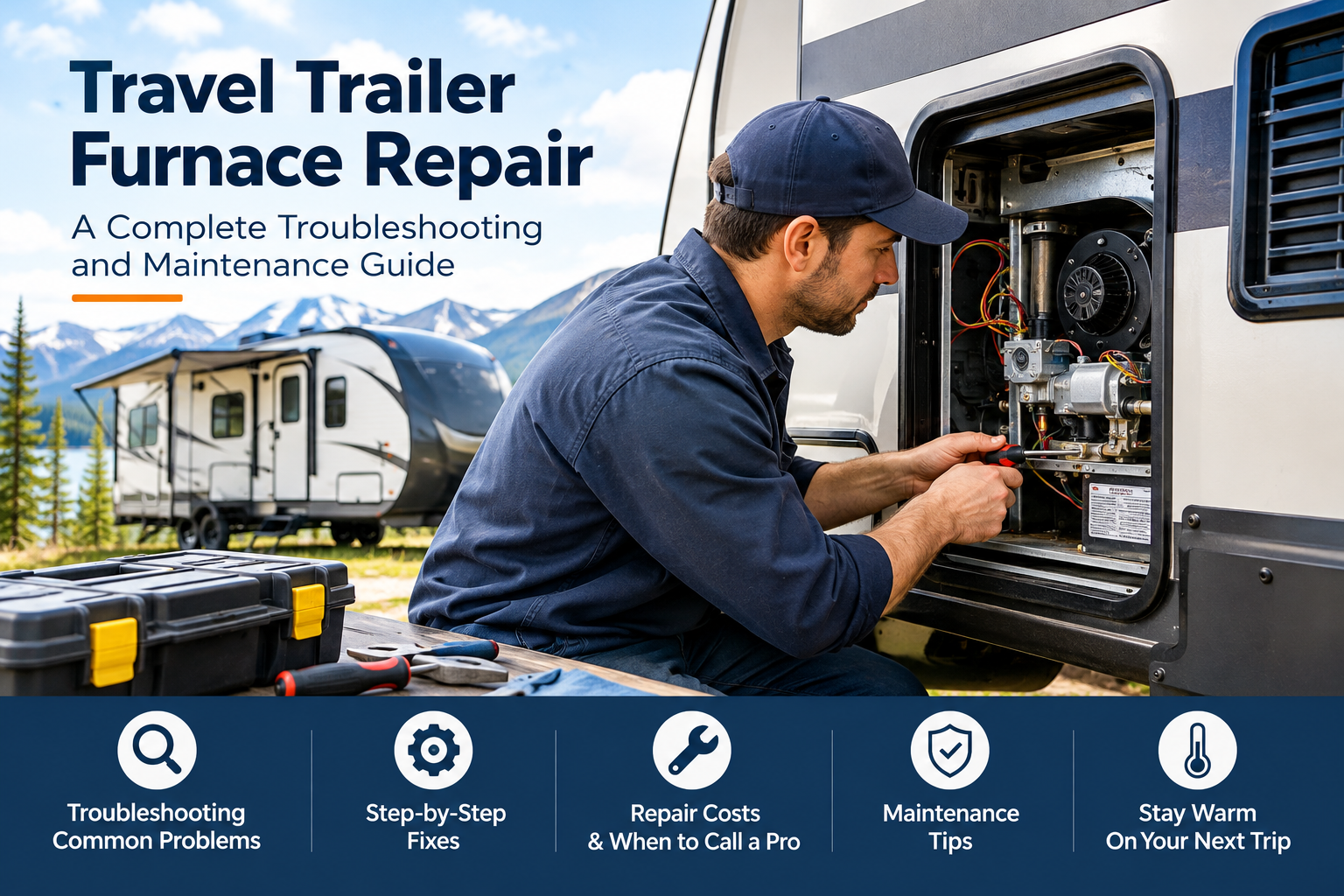
A reliable heating system is essential for comfortable travel trailer trips, especially during cold nights and winter camping. When your furnace stops working, blows cold air, or shuts off unexpectedly, even a short trip can become uncomfortable. Understanding travel trailer furnace repair can help you identify common problems, perform basic safety checks, and decide when to call a professional.
Most travel trailer furnaces use propane to generate heat and electricity to power components such as the blower motor, thermostat, and control board. Problems with any of these components can affect the furnace’s performance. Some issues involve simple checks, such as correcting a thermostat setting or clearing a visible obstruction from an exterior vent. Others require specialized tools and professional diagnosis.
This guide explains how travel trailer furnaces work, what causes common heating problems, which troubleshooting steps are safe for owners, and when professional repairs are necessary. It also covers repair costs, preventive maintenance, and important safety precautions.
How Does a Travel Trailer Furnace Work?
Understanding how your furnace operates can make troubleshooting easier. Most conventional travel trailer furnaces use propane combustion to produce heat while keeping combustion gases separate from the air circulating inside the trailer.
When the thermostat calls for heat, the furnace generally follows this sequence:
- The blower motor starts and moves air through the heating system.
- A safety switch confirms that sufficient airflow is available.
- The ignition system attempts to light the propane burner.
- A flame sensor confirms that the burner has ignited.
- The furnace continues heating while the thermostat calls for warmth.
- The burner shuts off when the desired temperature is reached. The blower may continue running briefly to cool the system.
The exact sequence depends on the furnace model. If one step fails, the furnace may stop operating, repeatedly attempt ignition, or blow air without producing heat.
Common Travel Trailer Furnace Problems
Recognizing the symptoms can help narrow down the possible cause of a furnace problem. However, several faults can produce similar symptoms. Avoid replacing components before the actual problem has been identified.
1. The Furnace Will Not Turn On
A furnace that does not respond may have an electrical problem, an incorrect thermostat setting, or a control-system fault.
Start with these basic checks:
- Confirm that the thermostat is set to heating mode.
- Set the target temperature above the current indoor temperature.
- Check that the trailer’s 12-volt electrical system is working.
- Inspect accessible fuses according to the owner’s manual.
- Confirm that the furnace switch is on, if your model has one.
Many RV furnaces require adequate 12-volt power even though propane provides the heat. A weak battery or poor electrical connection can prevent the furnace from starting.
If these checks do not resolve the problem, a qualified technician may need to test the thermostat circuit, wiring, control board, and safety switches.
2. The Furnace Blows Cold Air
If the blower runs but the air remains cold, the furnace may not be igniting properly. Possible causes include an interrupted propane supply, an ignition fault, restricted airflow, or a safety-control problem.
First, confirm that propane is available and that other propane appliances operate normally. If several appliances have problems, the issue may involve the propane supply rather than the furnace itself.
Other possible causes include:
- A failed ignition attempt.
- A dirty or damaged flame-sensing component.
- Low battery voltage.
- Restricted airflow or an overheating condition.
- A malfunctioning control board.
Some furnaces shut off the burner when a safety condition occurs. Depending on the model, the blower may continue running after the burner stops.
Do not remove burner components or adjust gas pressure yourself. Propane systems require proper testing and should be serviced by a qualified RV technician.
3. The Furnace Clicks but Does Not Ignite
Repeated clicking may indicate that the ignition system is attempting to light the burner. If ignition fails, the furnace may stop and enter a fault or lockout condition.
Possible causes include an inadequate propane supply, an ignition electrode problem, or a fault involving the gas valve or control system.
Consult the owner’s manual for the correct restart procedure. Some models allow a reset after an unsuccessful ignition attempt, while others require further diagnosis.
Avoid repeatedly restarting the furnace without understanding the cause. If you smell propane, stop troubleshooting, avoid operating electrical switches, and leave the area immediately. Follow the trailer manufacturer’s emergency instructions and contact the appropriate emergency service or propane professional from a safe location.
4. The Furnace Starts but Shuts Off Quickly
A furnace that starts and then stops may be responding to a safety condition. Restricted airflow, overheating, low voltage, or a flame-detection problem can cause repeated shutdowns.
Check that furniture, luggage, rugs, and other objects are not blocking the heat registers or return-air opening. When it is safe to do so, visually inspect the exterior intake and exhaust openings for snow, leaves, insects, or other obstructions.
If the furnace continues to shut down, stop using it until the cause has been identified. Never bypass a limit switch or another safety device to keep the furnace running.
5. The Furnace Makes Unusual Noises
Some blower noise is normal, but sudden changes in sound may indicate a mechanical or electrical problem.
Common warning sounds include:
- Rattling: A loose panel or component may be vibrating.
- Grinding: The blower motor or its bearings may be damaged.
- Loud humming: The motor may be struggling, or an electrical fault may be present.
- Repeated clicking: The ignition system may be attempting to light the burner.
Turn the furnace off if you hear severe grinding, smell something burning, or notice smoke. Do not continue operating a system that appears mechanically or electrically unsafe.
A qualified technician can inspect the blower assembly, mounting points, motor, and other components without compromising the furnace’s safety systems.
How to Troubleshoot a Travel Trailer Furnace Safely
Before arranging a repair appointment, you can perform several basic checks that do not require opening the furnace or handling gas components.
Step 1: Check the Thermostat
Make sure the thermostat is set to heat and the target temperature is above the current indoor temperature. If the thermostat uses batteries, check them according to the manufacturer’s instructions.
A faulty thermostat or an accessible loose connection may prevent the furnace from receiving a heating signal.
Step 2: Check the Battery and Electrical Supply
Many travel trailer furnaces depend on the trailer’s 12-volt electrical system. Low voltage can affect the blower motor, ignition system, and control board.
Check the battery and charging system using the procedure recommended by the trailer manufacturer. Inspect accessible electrical components for visible damage, and follow the manual’s instructions before handling connections.
If a fuse has blown, replace it only with the specified type and rating. If the replacement fuse blows again, do not install a larger one. Have the underlying electrical fault diagnosed.
Step 3: Confirm the Propane Supply
Check whether the propane cylinder contains fuel and whether the system’s normal supply controls are set correctly. Follow the instructions for your trailer and propane system.
If you suspect a leak, never use a flame to locate it. Stop using the appliance, avoid ignition sources, move to a safe location, and contact a qualified propane professional.
Do not loosen fittings, adjust the regulator, or dismantle gas lines during basic troubleshooting.
Step 4: Inspect the Exterior Intake and Exhaust Openings
A blocked combustion-air intake or exhaust outlet can interfere with safe furnace operation. Visually inspect the openings according to the owner’s manual.
Remove only loose debris that you can clear safely without reaching into the appliance or damaging its components. Never operate the furnace with a blocked exhaust outlet.
If you notice soot, melted material, unusual discoloration, or signs of exhaust leakage, stop using the furnace and arrange a professional inspection.
Step 5: Check Interior Vents and Return Air
Keep the warm-air registers and return-air openings clear. Restricted airflow can cause overheating and trigger a safety shutdown.
Do not assume that opening every register will solve the problem. Some furnace models require a specific duct arrangement, so follow the manufacturer’s airflow requirements.
Step 6: Review the Manual and Diagnostic Indicators
Some modern RV furnaces provide diagnostic lights or fault codes. Their meanings vary by manufacturer and model.
Consult the manual for your exact furnace before interpreting a blinking light or attempting a reset. Record the symptoms, any displayed code, and what happens during startup. This information can help a technician diagnose the problem more efficiently.
If these basic checks do not resolve the issue, stop troubleshooting and seek qualified service.
When Should You Hire a Professional?
Basic troubleshooting can help identify simple problems, but internal furnace repairs may involve propane, combustion, high temperatures, and electrical components.
Contact a qualified RV furnace technician if:
- The burner repeatedly fails to ignite.
- The furnace shuts down despite adequate power and clear vents.
- You suspect a gas leak or damaged gas connection.
- The control board, gas valve, ignition system, or flame sensor needs testing.
- You notice soot, unusual exhaust, burning smells, or damaged wiring.
- A fuse repeatedly blows or the blower motor makes severe grinding noises.
A professional can test the propane supply, electrical circuits, ignition sequence, combustion system, and safety controls. After completing the repair, the technician should verify that the furnace operates correctly and that its safety systems function as intended.
Do not bypass safety switches, operate the furnace with required covers removed, or modify the combustion-air or exhaust system. These actions can create serious fire, carbon monoxide, or other safety hazards.
Travel Trailer Furnace Repair Costs
The cost of travel trailer furnace repair depends on the problem, furnace model, parts availability, and local labor rates. A simple service visit may cost much less than replacing a major component or installing a new furnace.
Common cost factors include:
- Diagnostic service: The technician’s time to identify the fault.
- Minor repairs: Work involving an accessible connection, thermostat issue, or routine service item.
- Component replacement: Parts such as a blower motor, ignition component, or control board.
- Major repairs: Extensive work involving several failed components or significant damage.
- Furnace replacement: The cost of a suitable new unit, installation labor, and any required changes to ducting or connections.
Request an estimate that separates diagnostic fees, parts, labor, and additional charges. Confirm whether the quoted price includes post-repair safety and operational testing.
Check the furnace warranty and ask whether the trailer manufacturer or previous repair provider offers coverage. Keep receipts and service records in case you need them for a warranty claim.
Is Repair Better Than Replacement?
Repair is often a sensible choice when the furnace is in good condition and the fault involves a replaceable component. Replacement may be more practical when the unit has extensive damage, frequent failures, or repair costs that approach the total price of a suitable new furnace.
Consider the furnace’s age, parts availability, warranty, and overall condition. Ask a qualified technician to compare the estimated repair cost with the total installed cost of replacement.
Never choose a replacement furnace based on price alone. The new unit must be compatible with the trailer’s design, fuel system, ducting, electrical supply, and ventilation requirements.
How to Maintain a Travel Trailer Furnace
Regular maintenance can reduce unexpected breakdowns and help identify problems before a trip. Follow the service intervals and procedures in your furnace and trailer manuals.
Keep Airflow Open
Avoid blocking heat registers and return-air openings with bedding, bags, furniture, or other items. Check that the duct system has not been crushed or damaged during storage or travel.
Inspect Exterior Openings
Before using the furnace, check for visible obstructions around its intake and exhaust outlets. Look for snow, leaves, mud, insect nests, and other debris.
Never alter the vent openings or attach anything that restricts airflow.
Test the Furnace Before a Trip
Run the furnace according to the manufacturer’s instructions before traveling in cold weather. Confirm that it starts normally, produces warm air, and shuts down as expected.
If you notice a new smell, unusual noise, or repeated ignition attempts, arrange an inspection before relying on the heater overnight.
Maintain the Electrical System
Keep the battery and charging system in good condition. Follow the trailer manufacturer’s battery-care guidance and inspect accessible electrical components for obvious damage.
A furnace that works at home but fails while camping may be affected by low battery voltage or a charging-system problem.
Schedule Professional Service
Arrange professional maintenance at the intervals specified by the manufacturer, or sooner if the furnace shows warning signs. A technician can inspect components that should not be dismantled during routine owner checks.
Install and maintain carbon monoxide and smoke alarms according to their instructions. Test them regularly and replace them when required. These alarms provide an important layer of protection, but they do not replace proper furnace maintenance.
Frequently Asked Questions
1. Why Does My Travel Trailer Furnace Run but Not Produce Heat?
The furnace may have an ignition problem, an inadequate propane supply, low electrical voltage, restricted airflow, or a safety-control fault. Check the thermostat, battery, propane supply, and accessible vents. If the problem continues, arrange a professional diagnosis.
2. Can I Repair a Travel Trailer Furnace Myself?
You can perform basic checks, such as verifying thermostat settings, checking the battery condition, and looking for blocked vents. Internal gas, combustion, ignition, and electrical repairs should be handled by a qualified technician unless you have the necessary training and follow the manufacturer’s service procedures.
3. How Long Does a Travel Trailer Furnace Repair Take?
Repair time depends on the fault, furnace model, and availability of parts. A straightforward repair may be completed during one service visit, while a complex problem or a special-order part can take longer. Ask the technician for an estimate after diagnosis.
4. Why Does My RV Furnace Keep Shutting Off?
Repeated shutdowns may result from overheating, restricted airflow, low voltage, flame-sensing problems, or another safety fault. Keep the vents clear and consult the manual for diagnostic information. Do not bypass safety switches or continue operating a furnace that repeatedly fails.
5. Is It Safe to Sleep While a Travel Trailer Furnace Is Running?
A properly installed and maintained furnace may be designed for normal operation while occupants sleep. However, safety depends on the appliance, installation, and operating conditions. Follow the manufacturer’s instructions, maintain working carbon monoxide and smoke alarms, and keep the intake and exhaust openings clear.
If you suspect exhaust leakage, smell propane, or hear an alarm, leave the trailer and seek help from a safe location.
Conclusion
Reliable heating is important for comfort and safety during travel trailer trips. Understanding common furnace faults can help you recognize when the thermostat, electrical supply, propane supply, or airflow may be involved.
For travel trailer furnace repair, begin with safe, basic checks and consult the manual for your specific model. Avoid dismantling gas components, bypassing safety controls, or operating a furnace that shows signs of damage. When a problem involves ignition, combustion, wiring, or repeated shutdowns, contact a qualified RV technician.
Regular maintenance, clear vents, a healthy battery, and working safety alarms can help you prepare for cold-weather travel with greater confidence.